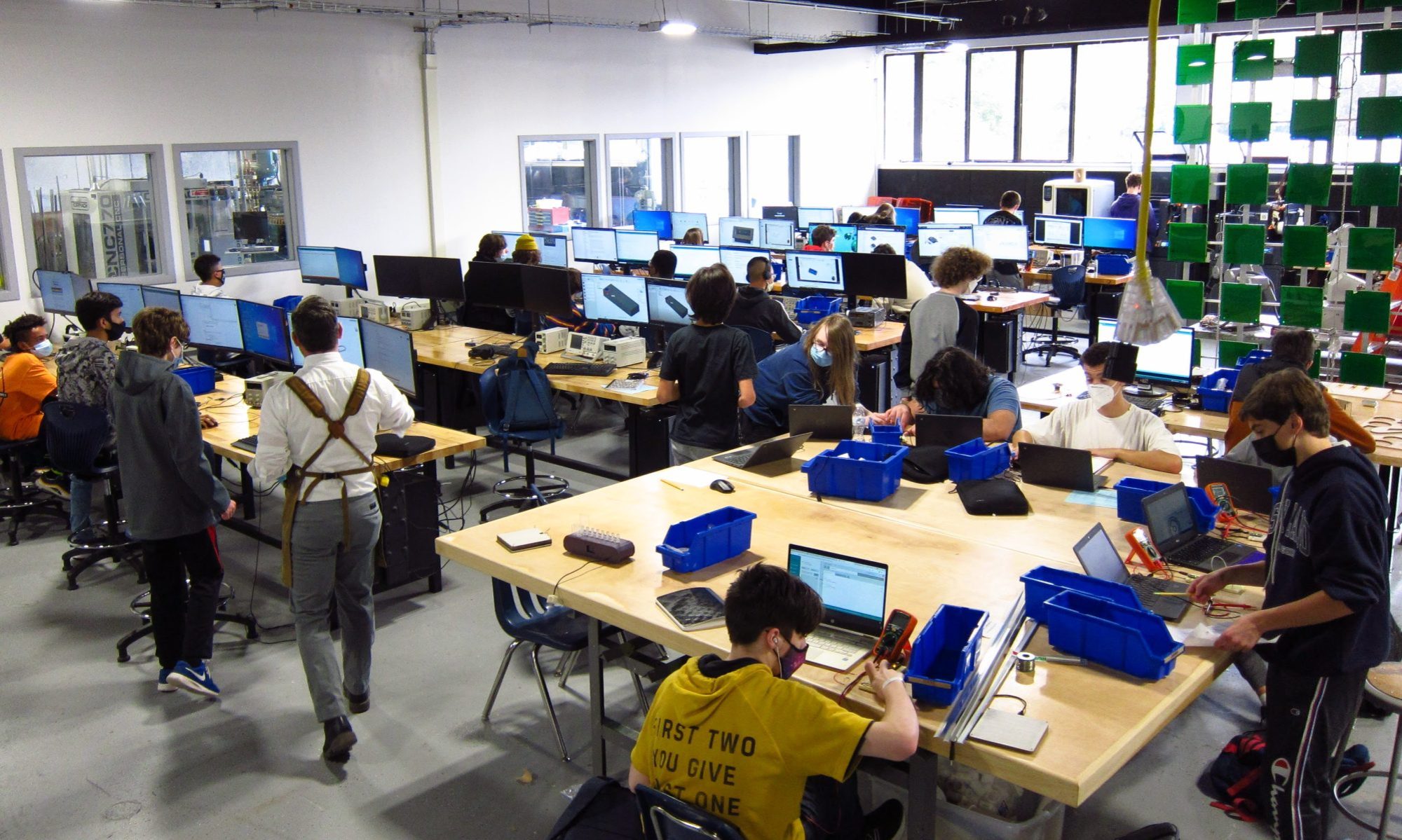

We begin this week firmly set into the month of May – how did that happen? Students continue to push hard working on their projects as the end of the school year slowly approaches. Here is what we were working on last week.
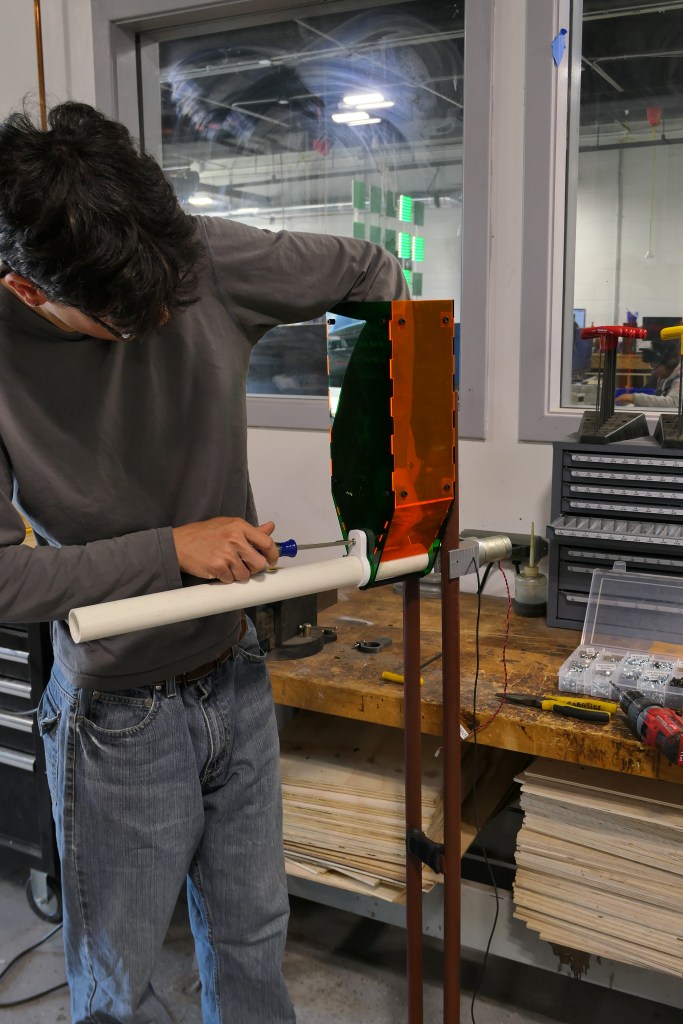
Junior Scott Campbell continued his work for the Robotics Team on their Float – an autonomous buoyancy engine. He writes on his website:
This week on the float I made significant progress on the code. I needed to integrate the depth sensor code into the firmware for the float which presented a interesting timing challenge. Many sequences need to be kept in sync in order for the code to function correctly. I first wanted to convert my code to run entirely using
millis()because I found that the alarm interrupt routine does not work with the Blue Robotics Depth Sensor Library because reading from the depth sensor takes too much time.I wrote the following function so I could cleanly handle timing:
bool time_check(unsigned long starting_time, unsigned long current_time, unsigned long target_time) {
  if (current_time - starting_time >= target_time) {
    return (true);
  } else {
    return (false);
  }
}
This allows me to have blocking loops while also checking depth by using the following code snipet.
while (not(time_check(starting_time, millis(), TIME_FLOATING))) {
  check_depth();
}
Pesky Errors
I got the basic functionality of the float working, but I have a lingering error. Roughly 10% of profiles the microcontroller will reset mid profile, this poses an issue because it goes back into communication mode in that case. This happens when the motor is changing directions, I want to solve this error completely in the future, but as of right now we do not have time for a hardware solution.
I have two plans, first ramping up the motor speed until it reaches full speed to hopefully prevent any voltage drop. I wrote the code to do that, but I did not have enough time to test its functionality. If that does not completely resolve the error I plan on focusing fully on error recovery.
I will have a flag in EEPROM that has where the float is in its profiling sequence, and I will save the depth data in an EEPROM buffer as well. Whenever the microcontroller starts it will check that file to see where it is supposed to be so it should be able to recovery gracefully from errors.
After the regional competition I will try to diagnose the root cause of the issue, but in the meantime it needs to work.
Read more and see photos on his website at this link.
Senior Isaiah Bell is taking a break from his drone project to work on custom coding for his website. He writes about it on his blog saying:
This week I had planned on implementing a “fading label” for my images on my rough draft. Provided by W3schools, I was able to follow along with their interpretation on how to implement a transitional label. They had made two separate elements from the image itself and it serves as a lid for the image. The label itself has zero opacity until the cursor reaches over the area of the image and it reveals itself as a result. This made some intriguing intervals along with an image table that I attempted to create. A issue risen from three of the different elements conflicting with each other.
These images had produced something similar to the image above and taken more space than what can be visually seem. It was slightly frustrating considering that this image had almost created a padding on its own.
Read more and see photos on his website at this link.
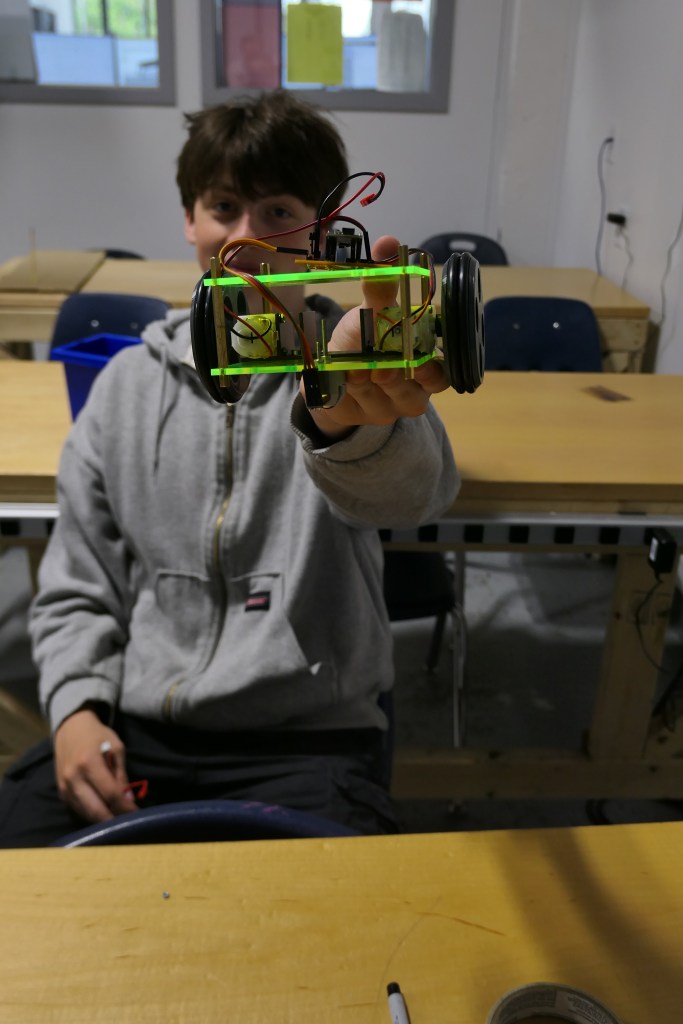
The Sophomores continue to progress on their Sumobots. We have several test fights happening each day. These are some of the best Sumobots we have seen in recent years.
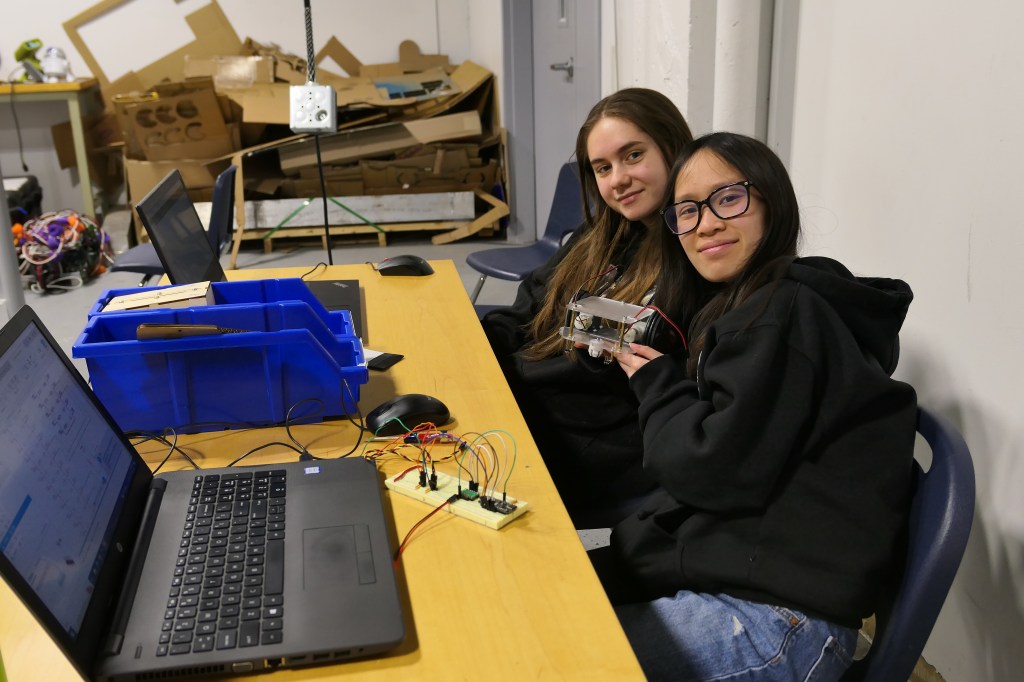
Our new Freshmen spent the week learning coding and circuitry basics. They have been moving through our guides with exceptional speed!
 MVTHS Engineering
You must be logged in to post a comment.